
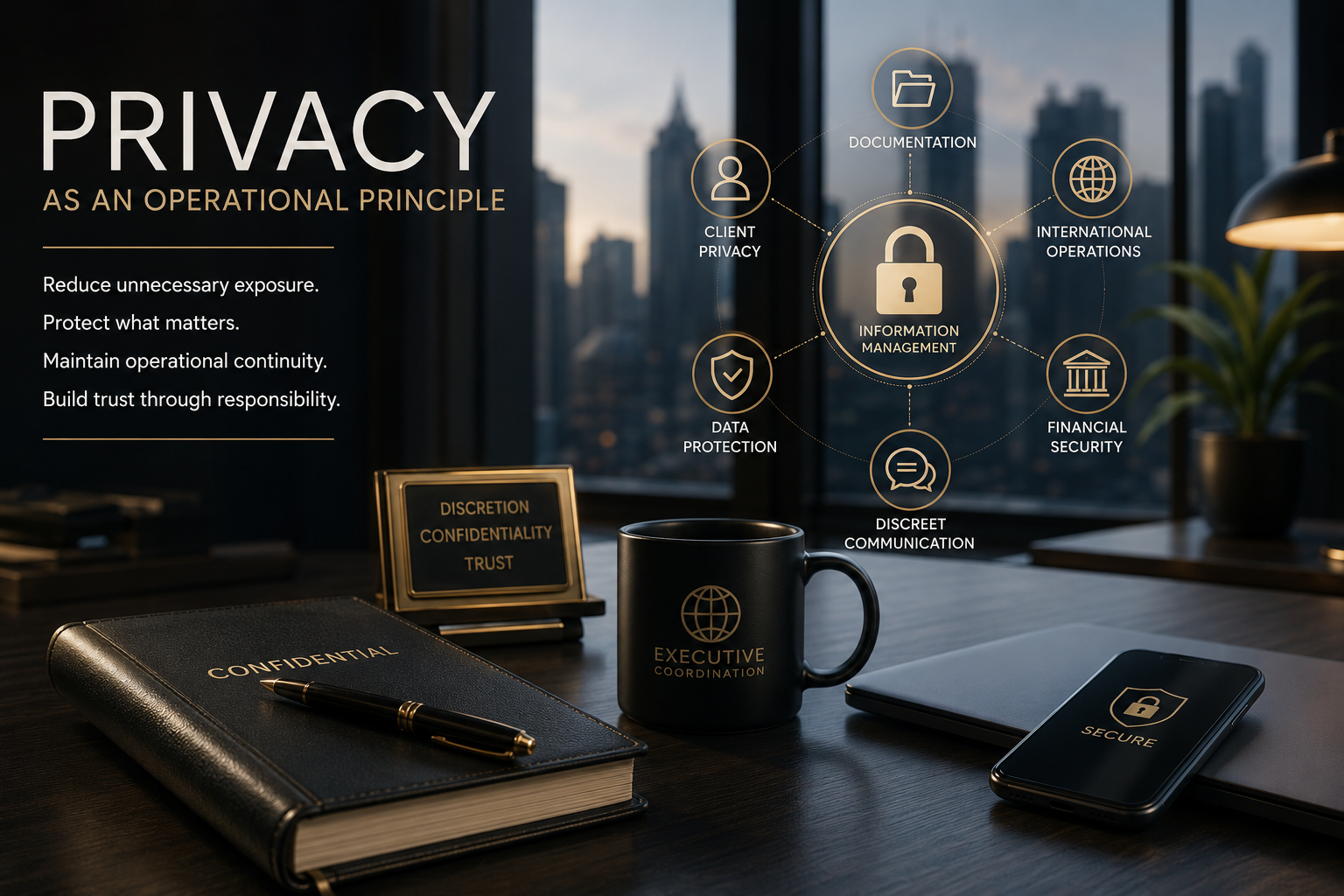
Privacy Is Not About Secrecy
Privacy is often misunderstood as secrecy or isolation. In reality, professional privacy management is about reducing unnecessary exposure while maintaining operational transparency where legally and organizationally required.
For internationally active entrepreneurs, privacy becomes increasingly important because modern operations generate large amounts of digital, administrative and communication data across multiple systems and jurisdictions.
Every booking, payment, communication process or international service interaction creates additional exposure points.
Reducing Unnecessary Exposure
Modern digital systems encourage centralization and constant data collection. However, excessive exposure creates operational risks. Unnecessary personal visibility, fragmented data distribution, uncontrolled provider access and administrative dependency can reduce operational stability.
Professional operational privacy means minimizing unnecessary disclosure while preserving full legal and organizational compliance.
The objective is not secrecy, but controlled information management.
International Structures and Information Management
International operations require interaction with multiple jurisdictions, payment providers, communication systems and administrative platforms. Without structured coordination, organizational complexity increases rapidly.
Professional concierge and executive coordination structures help centralize communication, documentation and operational oversight.
This creates better continuity, cleaner administrative processes and more controlled information management.
Trust Through Responsible Handling
Clients increasingly expect responsible handling of operational information. Confidentiality, discretion and structured communication are no longer optional features.
Professional privacy practices are therefore not only technical or regulatory requirements. They are part of long-term trust building and organizational stability.